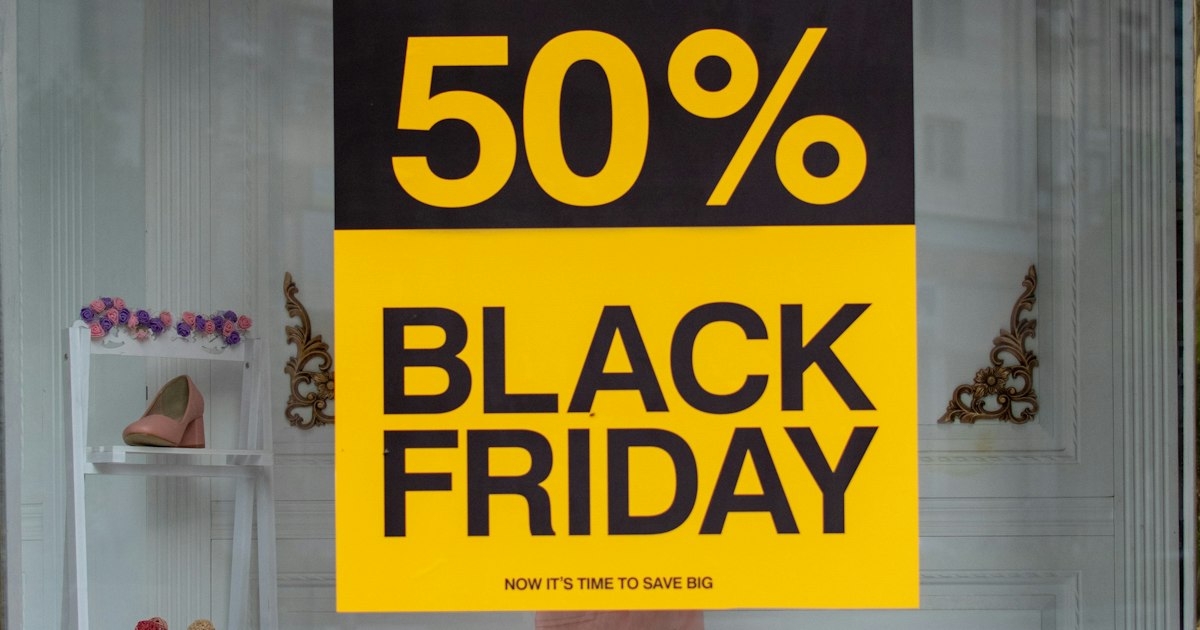
Black Friday is now the busiest sales period of the year for most fashion brands selling online. It is also the moment when a single pricing decision affects more revenue than any other decision in the calendar. This post looks at how large the event has become for fashion, what published research says about the profit effect of discounting, why fashion margins are thinner than they look at the point of discount, and how to build a product level Black Friday ecommerce strategy from your own store data.
How big Black Friday is for fashion
In the United States, Adobe Analytics recorded $11.8 billion in online spending on Black Friday 2025, a new single day record and up 9.1% year over year. Apparel was one of the three largest online categories of the season, with $49 billion in online sales over the holiday period, up 7.4%. Adobe also measured an average apparel discount of 25.1% off list price across the season.
Independent brands saw the same pattern. Shopify reported that its merchants sold $14.6 billion over the 2025 Black Friday weekend, up 27% from 2024. Clothing tops and pants and activewear were among the top selling product categories, more than 94,900 merchants had their highest selling day ever, and the average cart was $114.70. Germany was one of the five top selling countries.
In Europe the picture is more mixed. The German retail association HDE forecast €5.8 billion in revenue for the 2025 Black Friday sales days in Germany, which was the first expected decline since it started collecting data in 2016. HDE also estimated that about €1.6 billion of that spending was Christmas shopping, and 54% of surveyed shoppers said they use Black Friday for Christmas purchases. For a fashion brand this means part of the Black Friday volume is demand that would otherwise have come in December, often at a higher price.
The event is large and growing in most markets. Whether it is profitable for an individual brand depends mostly on how the discounts are set.
Why pricing has more effect on profit than volume
McKinsey's analysis of the average S&P 1500 income statement is one of the most widely cited figures in pricing. A 1% increase in price, with volume unchanged, raised operating profit by about 8%. The same works in reverse: a 1% decrease in average price lowered operating profit by about 8%. In the same analysis, volume had to rise by 18.7% just to offset the profit effect of a 5% price cut.
Fashion margins are different from the S&P 1500 average, but the mechanism is the same. A discount reduces the revenue on every unit sold, including the units that would have sold at full price without it. The extra units the discount brings in have to cover that loss before the promotion adds any profit.
How much should a fashion brand discount on Black Friday?
The safe discount depends on the margin of each product. The question to answer for each product is how many more units a discount needs to sell to earn the same profit as full price. The calculation is simple:
Required sales lift = discount ÷ (contribution margin minus discount)
Contribution margin here is the share of the net selling price left after product cost, payment fees, shipping, and the expected cost of returns. The table below shows the result for common combinations.
| Contribution margin | 10% off | 20% off | 30% off |
|---|---|---|---|
| 60% | 20% more units | 50% more units | 100% more units |
| 50% | 25% more units | 67% more units | 150% more units |
| 40% | 33% more units | 100% more units | 300% more units |
Two things stand out. First, the required lift rises quickly as the discount approaches the margin. At 40% contribution margin, moving from 20% off to 30% off triples the required lift. Second, the same discount can be safe for one product and loss making for another in the same store. A sitewide percentage treats them as if they were the same.
Where fashion margin goes before the discount
Fashion brands often look at gross margin on the product page price when they choose a discount. Several costs sit between that number and the money the brand actually keeps.
VAT. In the EU the price shown to the customer includes VAT. With 21% VAT, a €121 dress produces €100 of net revenue, and the margin calculation should start there.
Payment fees and shipping. These are charged on every order, and shipping costs do not fall when the price falls. On a discounted order they take a larger share of the remaining revenue.
Returns. Returns are the largest difference between fashion and most other categories. Retailers surveyed by the National Retail Federation and Happy Returns expected 17% of 2025 holiday sales to be returned and 19.3% of all online sales. Coresight Research estimated the return rate for US online apparel at 24.4%, with size and fit as the most common reason. A returned unit does not only reverse the sale. It also carries outbound shipping, return shipping, and handling, and some returned items cannot be resold at full price. We covered the cost side in more detail in the true cost of fashion returns and in what McKinsey says about the cost of fashion returns in 2026.
Once these costs are included, a product with a comfortable looking gross margin can have a contribution margin close to zero. Discounting that product loses money on every sale, even if it looks like an obvious clearance candidate.
Want a Black Friday analysis of your store? We calculate the real margin and the maximum safe discount for every product in your Shopify catalog, so you know exactly what to put on sale and how deep to go. Book a call
Is Black Friday profitable for fashion brands?
It can be, but only when the discount is targeted. Return policy is part of the same picture, as we discussed in the return policy paradox. McKinsey's work on markdowns in retail lists three recurring mistakes: marking down items that are already hitting their sales targets and would most likely keep selling at full price, applying markdowns deeper than needed to reach sell-through or margin targets, and applying reductions that are too small to move slow products. A single sitewide percentage tends to make all three at once. It gives away margin on bestsellers, goes deeper than necessary on mid-performers, and may still not be enough to clear old stock.
There is also a longer term effect. In three large field experiments, Anderson and Simester found that deeper discounts increased future purchases by first-time customers but reduced future purchases by established customers. Their explanation includes forward buying, customer learning, and increased deal sensitivity. Existing customers who are given a deep discount learn to wait for the next one. The Business of Fashion has made a similar observation from the retail side: during one holiday period, the number of items selling out at first discount rose 36% year over year while the effect on retailer margins was negative.
None of this means fashion brands should avoid Black Friday. It means the event works best when the discount is targeted.
A Black Friday ecommerce strategy that protects margin
The brands that come out of Black Friday with both revenue and margin usually make the decision at product level rather than store level. In practice that means a few steps.
Give every product a role. Bestsellers, new arrivals, and items that are restocked at full price are protected from discounting. A small set of proven products with healthy margin and full size runs carries the headline offer. Old, slow, or broken-size stock goes into clearance, where the goal is recovering cash rather than earning full margin. Products with very low stock, very high return rates, or supplier pricing restrictions are excluded.
Set a maximum safe discount per product. Using contribution margin after VAT, fees, shipping, and returns, each discounted product gets a ceiling that respects a margin floor you choose. If you have last year's Black Friday data, compare the actual sales lift to the required lift from the table above.
Choose the offer type, not only the depth. A percentage off is one option. Free shipping above a threshold, a tiered spend-more-save-more offer, a bundle, a gift with purchase, or a clean price point such as €99 can reach the same goal with less margin given away. Thresholds should be tested against your real order values. If most orders already exceed the threshold, the offer adds cost without changing behavior.
Keep the timeline consistent. Every discount should have an end date, and later offers should not be deeper than earlier ones. Otherwise early buyers and loyalty customers pay more than people who waited, and customers learn to wait for the last and deepest offer.
Price rules for brands selling in the EU
Brands selling to EU customers have an extra constraint. Article 6a of the Price Indication Directive, added by the Omnibus Directive and applied across the EU since May 2022, requires every announced price reduction to show the prior price, defined as the lowest price applied during at least the 30 days before the reduction. In September 2024 the Court of Justice of the EU ruled in case C-330/23 that an advertised percentage reduction must also be calculated from that prior price.
For Black Friday this has three practical consequences. Promotions that run in the 30 days before Black Friday lower the reference price for any Black Friday discount on the same products. A Black Friday price may become the reference price for a Christmas sale that starts within 30 days. And the brand needs a reliable record of its own price history, which Shopify does not keep in full by default. Member states apply the rule with some local variation, so check with an advisor for the countries you sell to. This section is general information, not legal advice.
Plan your Black Friday pricing with an open-source Claude skill
We built shopify-black-friday to turn the process above into a guided session for fashion, footwear, and accessories brands on Shopify. It is a free, MIT licensed skill for Claude that runs in claude.ai and connects to your store through Shopify's official connector. You do not need technical knowledge to use it.
The skill works in five steps, and each step ends with a summary you confirm:
- Pricing scan. Claude reads prices, costs, sales history, order values, stock, and existing discounts. This step changes nothing in your store.
- Pricing interview. Claude asks about your price position, goals, margin floor, payment fees, shipping costs, return rates, stock to clear, and products you cannot discount. If you do not know a number, it says which default it uses and how that affects the result.
- Product roles and safe depth. Every product is assigned a role (Protect, Hero, Clearance, Low-return boost, or Exclude) with a short reason. Each discounted product gets a maximum safe discount, the money kept per sale at full and discounted price, and the break-even volume.
- Offer design and scenarios. Claude selects offer types that fit your top priority, checks thresholds against your actual orders, and presents Conservative, Balanced, and Aggressive scenarios with one recommendation.
- Discount creation. After you approve a written plan, Claude creates the discounts in Shopify with end dates, reads them back to confirm they match, and keeps a one-step undo available.
The skill never edits product prices or compare-at prices, saves a backup before every change, and does not invent missing numbers. For EU stores it calculates the advertised percentage from the 30-day lowest price and flags the date after which other promotions would affect the Black Friday reference price.
Setup takes about five minutes. Turn on code execution in Claude's settings, download the .skill file and upload it under Skills, then connect Shopify under Connectors. Full instructions and example questions are in the GitHub repository. Because the skill is open source, your team can adapt the rules to your own pricing policy.
If you would rather have the analysis done for you, or want Black Friday pricing combined with catalog and channel work across Shopify, Google, and Meta, book a call with SIXFIT.
Sources
- Adobe Analytics, 2025 US holiday season and Black Friday online shopping results (via Talk Business & Politics and Business Wire).
- Shopify, "Shopify merchants generate record-breaking $14.6 billion in Black Friday Cyber Monday sales," December 2, 2025.
- Handelsverband Deutschland (HDE), Black Friday 2025 forecast, November 17, 2025.
- McKinsey & Company, "The power of pricing," McKinsey Quarterly.
- McKinsey & Company, "Hitting the mark: Why markdowns matter more than ever."
- Anderson, E. T. and Simester, D. I. (2004), "Long-Run Effects of Promotion Depth on New Versus Established Customers: Three Field Studies," Marketing Science 23(1), 4 to 20.
- The Business of Fashion, "The art of the markdown."
- National Retail Federation and Happy Returns, 2025 Retail Returns Landscape, October 2025.
- Coresight Research, "The True Cost of Apparel Returns," April 2023.
- Directive 98/6/EC Article 6a, as amended by Directive (EU) 2019/2161, and Court of Justice of the European Union, judgment of 26 September 2024, case C-330/23.
Frequently asked questions
- How much should a fashion brand discount for Black Friday?
- There is no single right percentage. Adobe measured an average apparel discount of about 25% off list price across the 2025 US holiday season, but the depth that is safe for your store depends on your contribution margin per product after VAT, payment fees, shipping, and returns. A product with a 40% contribution margin needs twice as many sales to break even at 20% off, while a product with a 60% margin needs 50% more. The practical approach is to set a maximum safe discount per product rather than one sitewide number.
- Is Black Friday profitable for small fashion brands?
- It can be, but revenue growth does not guarantee profit. McKinsey's analysis of typical company economics shows that a 1% drop in average price lowers operating profit by about 8%, and a 5% price cut needs roughly 18.7% more volume just to break even. For fashion brands, high return rates reduce the margin further. Black Friday tends to be profitable when discounts are limited to products where the extra volume clearly covers the margin given away, such as overstock and proven sellers with healthy margins and deep size runs.
- How do I calculate the break-even sales lift for a discount?
- Divide the discount by the contribution margin that remains after the discount. If a product keeps 50% of its net price as contribution margin and you discount it by 20%, the remaining margin is 30%, so you need 20 divided by 30, or about 67% more units to earn the same profit as at full price. Contribution margin here means net price minus product cost, payment fees, shipping, and the expected cost of returns.
- Should I discount my bestsellers on Black Friday?
- Usually not. McKinsey lists marking down items that are already hitting their sales targets as one of the most common markdown mistakes, because those items would most likely have sold at full price anyway. Bestsellers, new arrivals, and items you restock at full price are better protected with no discount, or supported with a gift with purchase or free shipping threshold instead.
- What is the average return rate for fashion bought on Black Friday?
- Retailers surveyed by the National Retail Federation and Happy Returns expected 17% of 2025 holiday sales to be returned, and 19.3% of all online sales. Online apparel runs higher: Coresight Research estimated a 24.4% return rate for US online apparel. Every returned unit also carries shipping and handling costs, which is why return rates belong in the discount calculation.
- Do Black Friday discounts in the EU have to use the lowest price from the last 30 days?
- Yes. Article 6a of the EU Price Indication Directive, added by the Omnibus Directive, requires any announced price reduction to show the prior price, defined as the lowest price applied in at least the 30 days before the reduction. In September 2024 the Court of Justice of the EU ruled in case C-330/23 that an advertised percentage discount must be calculated from that prior price. This is general information, not legal advice.
- What is a good Black Friday ecommerce strategy for fashion brands?
- A good Black Friday ecommerce strategy for fashion brands decides discounts per product instead of sitewide. Bestsellers, new arrivals, and full-price restocks are protected, a small set of proven products with healthy margins carries the headline offer, and slow or broken-size stock goes into clearance. Each discounted product gets a maximum safe discount based on contribution margin after VAT, payment fees, shipping, and returns. Offer types such as free shipping thresholds or bundles are tested against real order values, and every offer has an end date.
- Can AI help me plan Black Friday discounts in Shopify?
- Yes. SIXFIT's open-source shopify-black-friday skill for Claude reads your Shopify store through Shopify's official connector, asks about your costs, returns, and goals, sorts every product into a pricing role, calculates the maximum safe discount and break-even volume per product, and creates the discounts in Shopify only after you approve a written plan. It is free and MIT licensed on GitHub.